
Welcome to our Dry Eye Clinic. Explore some of our Dry Eye treatments and solutions and get back to enjoying clear, healthy vision.
Dry Eye Clinic
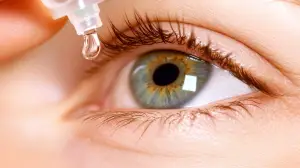
Tired of Dry Eye Discomfort? Visit Us Today!
At Pickerington Eyecare, we specialize in diagnosing and treating dry eye disease for patients across Pickerington, Canal Winchester, and Reynoldsburg. If you’re dealing with irritated, burning, or watery eyes—especially after long hours on screens or during Ohio’s seasonal allergy swings—our team is here to help.
We use advanced diagnostic tools to uncover the root cause of your symptoms, whether it's digital eye strain, meibomian gland dysfunction, or hormonal changes. Treatment plans are fully customized and may include artificial tears, omega-3 supplements, anti-inflammatory drops, or in-office therapies like IPL.
Dry eye is especially common in Pickerington’s active families and working professionals, who often experience symptoms tied to lifestyle or environment. Ignoring dry eye can lead to chronic discomfort or long-term damage, so early intervention matters. If your eyes feel gritty, tired, or blurry by the end of the day, schedule a dry eye consultation with our expert team. We’re proud to offer compassionate, tech-forward care that helps our community see clearly and feel more comfortable every day.
Diagnostics and Treatments We Offer
Our dry eye clinic utilizes advanced diagnostic tests and specialized treatments to provide relief from dry eye symptoms.

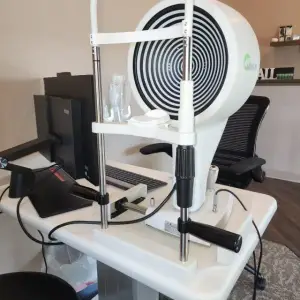
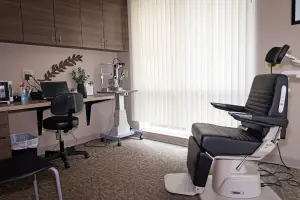
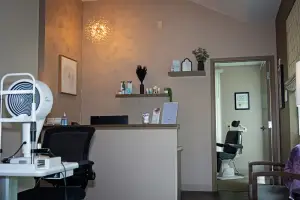
TearLab® Osmolarity Test
The TearLab® Osmolarity System is used to measure the osmolarity of tears, aiding in the diagnosis of dry eye. This test provides a quick, simple method for determining tear osmolarity—or salt concentration—using very small amounts of tear fluid collected directly from the eyelid margin. The results help distinguish a healthy eye from one with dry eye disease and also help monitor the effectiveness of the following treatments.
Each treatment typically takes only a few minutes and is completely non-invasive. After the procedure, you may experience slight discomfort or irritation on your eyelid, which usually resolves within a day or two.Punctal Plugs
Punctal plugs are small devices made of collagen that are inserted into the tear ducts to slow or even block the drainage of tears. This increases tear-film and moisture in the eyes. Punctal plugs dissolve in 3-6 months, making them ideal for seasonal dryness, though some patients may have them placed 2-3 times per year.Prokera
Prokera is a revolutionary treatment for severe and chronic dry eye. Amniotic membranes, collected during elective cesarean births from the placenta, protect and nurture the baby in the womb. When placed over the eye, this membrane dramatically heals the eye surface damaged by prolonged dry eyes. No sale of body parts is involved, and no harm comes to the infant or the mother in extraction.The Prokera amniotic membrane is a thin layer held together by a small plastic ring, which fits where the eyelid meets the sclera (the white part) of the eye and stays in place for at least 2 days. Healing from this method is typically very fast, with patients noticing improvement within a week of membrane removal.
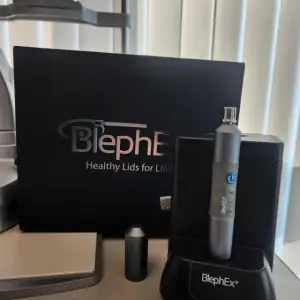
Zest / Blephex
Blephex: A small handheld medical device gently rotates a medical-grade cleaning sponge along the edge of your eyelid to remove debris and bacteria while exfoliating your skin. It’s designed to be painless and gentle on the delicate skin of your eyelid.
Zest: This involves applying a gel to the eyelid margins and lashes with a sterile foam swab, which is then used to deep clean the eyelid and eyelash area. Zest is particularly effective for treating Demodex blepharitis.
Each treatment typically takes only a few minutes and is completely non-invasive. After the procedure, you may experience slight discomfort or irritation on your eyelid, which usually resolves within a day or two.
TearCare®
TearCare® is a 15-minute in-office procedure used to treat meibomian gland disorders. Sterile, single-use flexible eyelid devices adhere gently to the contours of the eyelids, applying low heat.
TearCare begins with a small applicator placed on the outer edges of the upper and lower eyelids. Unlike other treatments, TearCare allows you to keep your eyes open during the procedure. Consistent therapeutic heat is applied through the applicators, and, along with blinking, it helps unclog the glands. Your doctor will also express the meibomian glands to help remove blockages, stimulating oil production for a healthier tear film and reduction of dry eye symptoms.
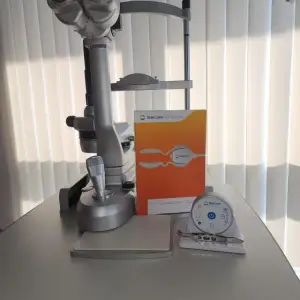
Advanced Dry Eye Treatment: Intense Pulsed Light (IPL)
Tired of temporary relief? If artificial tears and warm compresses aren’t solving the problem, it may be time to address dry eye at its source.
We proudly offer Intense Pulsed Light (IPL) therapy, an advanced, clinically proven treatment designed to reduce inflammation and restore healthy meibomian gland function. Instead of simply masking symptoms like burning, redness, and irritation, IPL works to improve the quality of your natural tears — helping provide longer-lasting, meaningful relief.
If your dry eye isn’t improving, IPL could be the next step in your treatment plan.